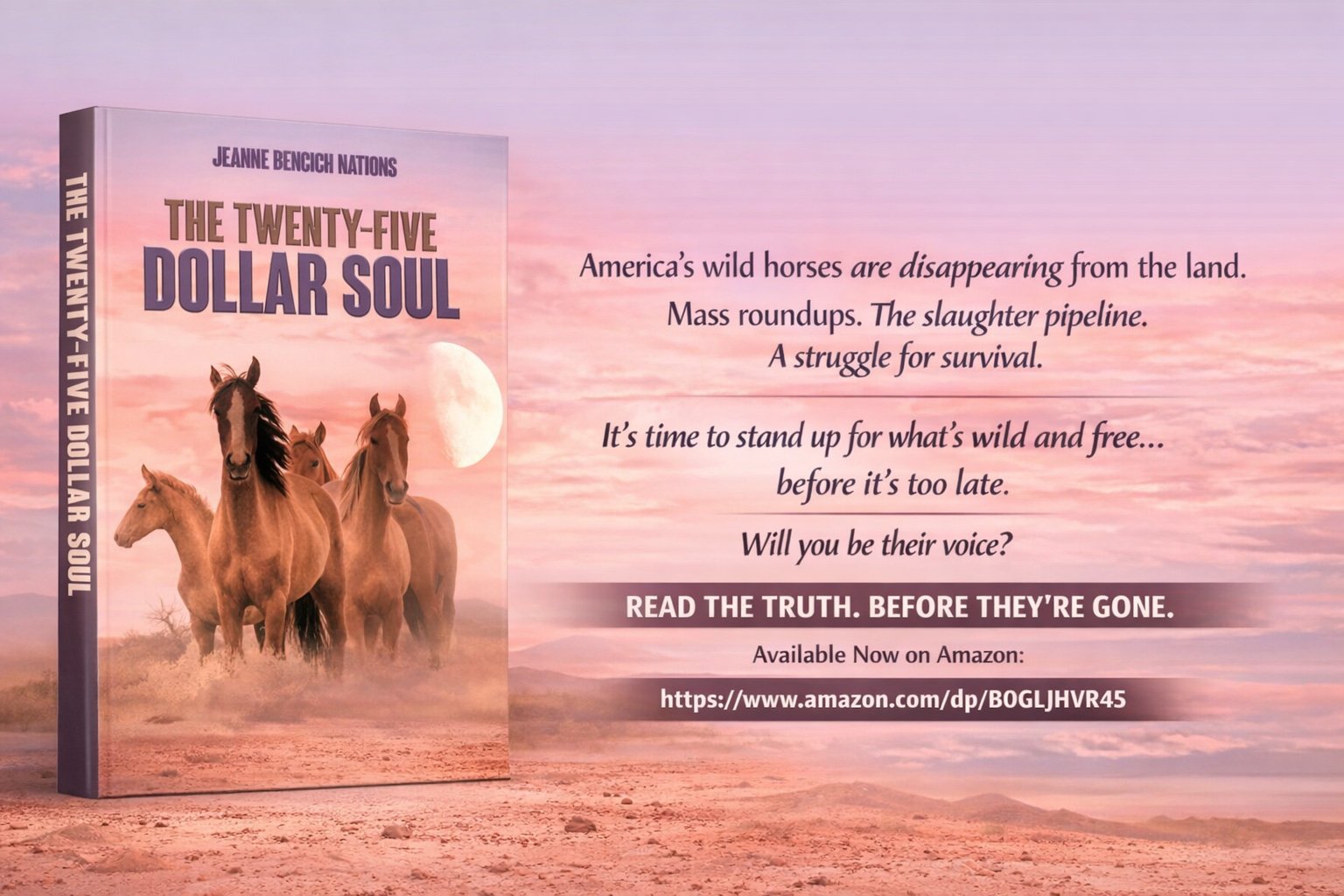
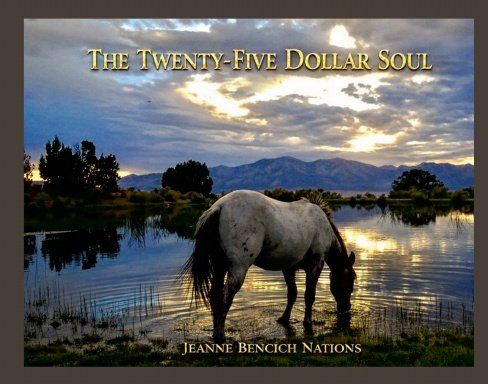
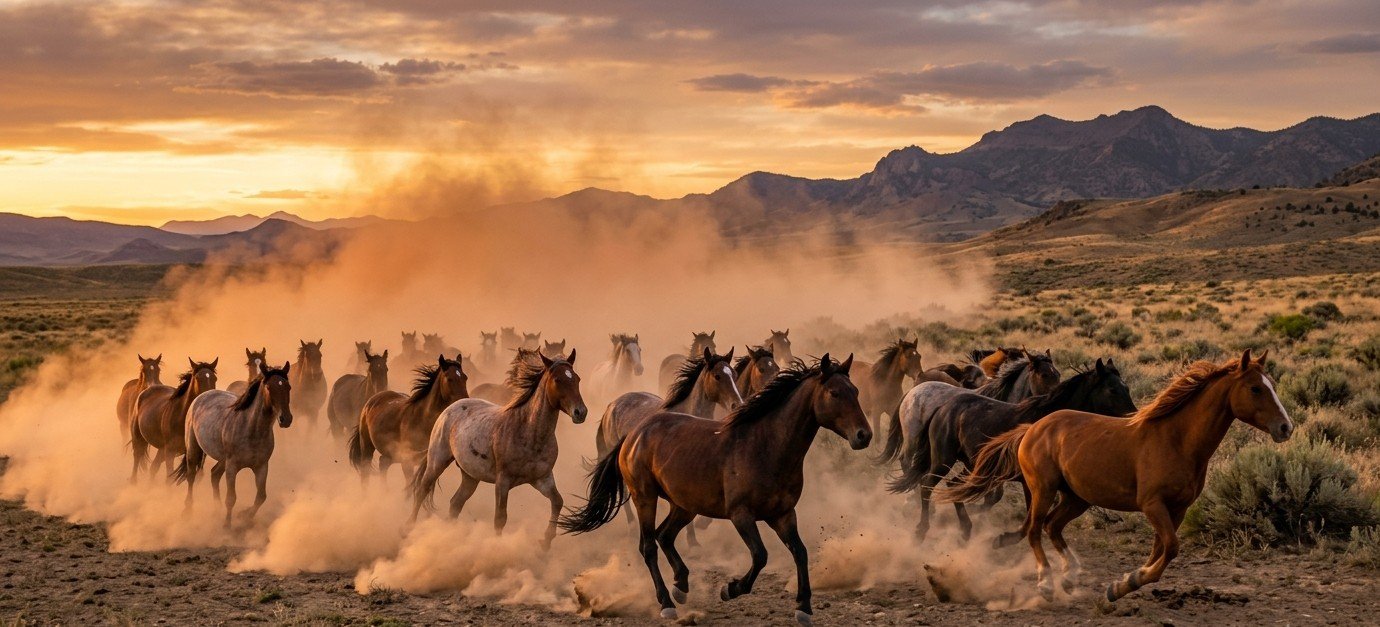
The Twenty-Five Dollar Soul immediately stood out to me because it doesn’t read like a rushed “horse book” written to romanticize the West. The author clearly spent serious time observing both the land and the animals themselves, and that patience comes through in the writing. Beautiful pictures enhance the experience.
The sections describing the Great Basin were some of my favorites. The descriptions of northeastern Nevada — the sagebrush, dry valleys, predators, sparse grasslands, and extreme conditions — create a vivid backdrop without feeling overly flowery. You can tell the environment itself is an important character in the story, not just scenery.
What really resonated with me personally were the observations about mustang behavior and band dynamics. I’ve trained several mustangs myself over the years, and one thing people who haven’t spent time around them often misunderstand is how intelligent, emotionally aware, and socially complex they are. This book captures that extremely well. The descriptions of matriarch-led bands, young foals testing boundaries, and the careful attention paid to body language felt authentic to my experience working with these horses.
I especially appreciated the emphasis on ethical observation and minimal interference. Too many books either treat wild horses as symbols or reduce them to management problems. Here, the animals are treated with respect as living creatures shaped by a difficult environment and intricate social structures. That balance made the narrative feel more grounded and believable.
The author also does a good job explaining the interconnected ecosystem of the Great Basin — coyotes, elk, pronghorn, birds of prey, rattlesnakes, and the vegetation that supports them all — without turning the book into a dry academic lecture. It reads more like someone sharing accumulated field knowledge and personal experience.
If I had one minor criticism, it’s that some passages lean heavily into environmental description early on, and readers looking for immediate narrative momentum may find the pacing a little slow at first. But once the focus shifts more directly toward the horses and their behavior, the book becomes genuinely absorbing.
Review from customer on Amazon.com
As someone who has spent meaningful time around mustangs, I found this book refreshing because it understands what makes them special. They are incredibly perceptive animals — tough, sensitive, independent, and often wonderful to be around once trust is established. This book captures that spirit better than most.